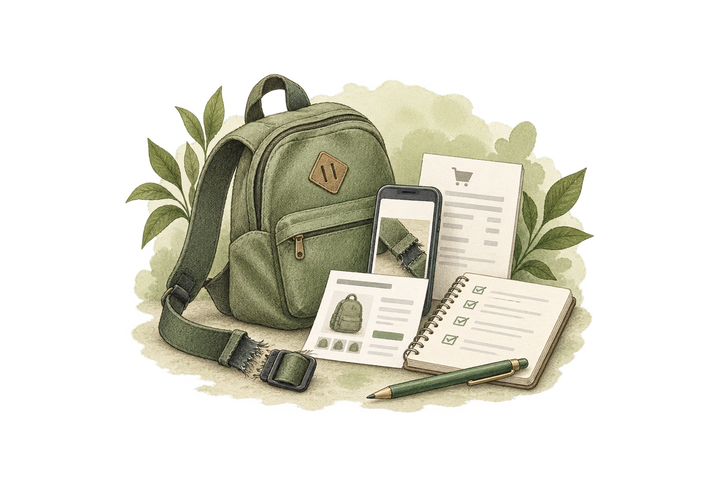
Imagine you are on a bus and the strap of your new backpack snaps. When you get home, you set the bag on the table and look at the torn stitching. You bought it last week for your course, and now you need it.
You may want to send an angry message straight away. Instead, you put the bag down, open the order email, and take a clear photo in good light. Being upset makes sense, but a short factual complaint is easier to understand and harder to dismiss.
A strap that fails after two days
Suppose the backpack was advertised as suitable for carrying books. You used it for two days with your course books inside, and one strap pulled away from the bag.
You start typing, then delete, “This shop sells rubbish,” and write: “I bought this bag on Monday. The strap came apart after two days while carrying course books. Please tell me the return process and whether you can arrange a replacement or refund.”
The first reply is a standard delivery message that does not answer your problem. You feel your temper rise.
You send one more message: “Order number 4732. Photo attached. Please could someone review the fault and confirm the return address?”
A few days later, the shop sends a return label. The replacement does arrive, but not before your first class, so you borrow an older bag from your sister for the week.
The outcome is not perfect. You still lose time. But because you kept the listing, the photo, and the messages, you can show what happened and what answer was missing.
What we can learn
Name the problem as plainly as you can. Faulty, late, not as described, or changed your mind are different situations. A clear description gives the seller something they can check.
Keep a basic record from the start: proof of purchase, the product description, photos of the problem, and copies of messages. If you need to follow up later, you do not have to rely on memory.
Ask for one practical remedy. Refund, repair, replacement, or correction may fit, depending on the purchase and local rules. If timing matters, say so. A solution that arrives too late may not solve the real problem.
Safety comes first. Stop using an item that may be unsafe, especially a damaged electrical product or anything that could injure you. Before returning devices, back up personal files and remove private information if appropriate. Do not give a seller passwords or security codes to process a refund.
Check local consumer guidance and any complaint or payment-dispute deadlines early. Seller policies may not describe all your rights, and a refund is not automatic.
Try this today
Choose one recent purchase, save the receipt or order email in an easy-to-find place, and draft one short complaint message with the order number, the problem, and the remedy you would ask for if needed.