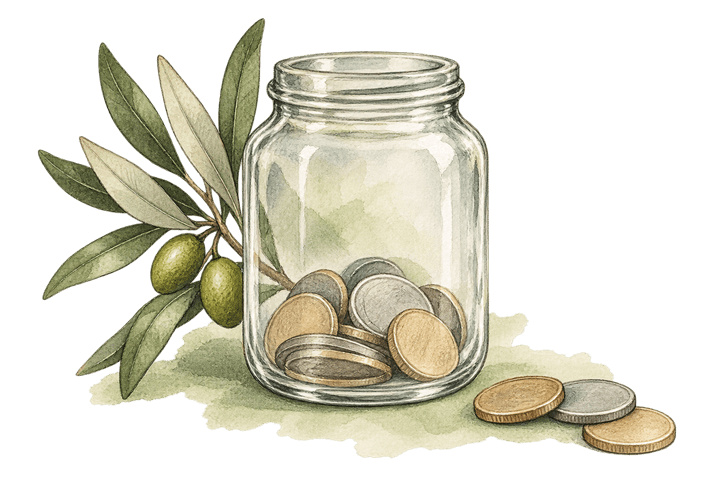
"I'll save whatever is left."
You may have made that plan yourself. Then food, housing, travel or support for your family uses most of your income. A few optional purchases take the rest.
By the next payment, there is little or nothing to save.
Before deciding that you need a larger target or more willpower, look at what your money must cover. The useful question is whether any amount is safe to set aside before optional spending begins.
Give a small amount a clear purpose
Imagine your next income is due soon. Write down what must be paid before the following payment arrives. Include everyday food and travel, not only bills with a due date.
If a small amount remains, you might choose part of it for unexpected costs and leave some room for ordinary enjoyment. Choose a place that is suitable for short-term savings, checking access, fees and conditions before moving money.
Someone might say, "That won't cover a big emergency."
"No," you could answer. "But it could cover part of one."
Suppose the bicycle you use for work later needs a repair. The savings pay for some of it, although you still need to adjust your spending.
Your balance looks small again. It is easy to feel that you have lost your progress. But money set aside for an unexpected cost has now helped with an unexpected cost. It has served its purpose.
Before saving again, look at your next needs. You may be able to set aside the same amount, a smaller amount or nothing for now. The plan needs to fit the money available, not the other way around.
What we can learn
Start with money you actually have or reasonably expect. Count essential costs and existing commitments first. Saving before optional spending does not mean saving before eating, paying necessary bills or meeting other essential needs.
If there is room, choose a modest amount while you can still decide where it goes. It may be easier to protect a small amount with a purpose than to hope something remains after every other purchase.
Do not choose an amount that leaves you borrowing for food or missing necessary medicine. If your plan causes that problem, review it. A smaller amount, or a pause in saving, may be the realistic choice.
Keep money for near-term costs accessible. Check charges and withdrawal conditions. Give the money a clear purpose so you do not count the same amount towards both a known bill and an emergency.
Your income may arrive as wages, irregular payments or a pension. What you can safely save may change. Look again when your income, responsibilities or essential costs change.
Sometimes essentials use everything. That is a financial difficulty, not evidence that you lack discipline. Record the situation honestly. You do not have to turn an impossible saving target into another reason to blame yourself.
Try this today
List what your next income must cover. If money remains, choose one small amount and a purpose for it. If nothing safely remains, record that honestly.