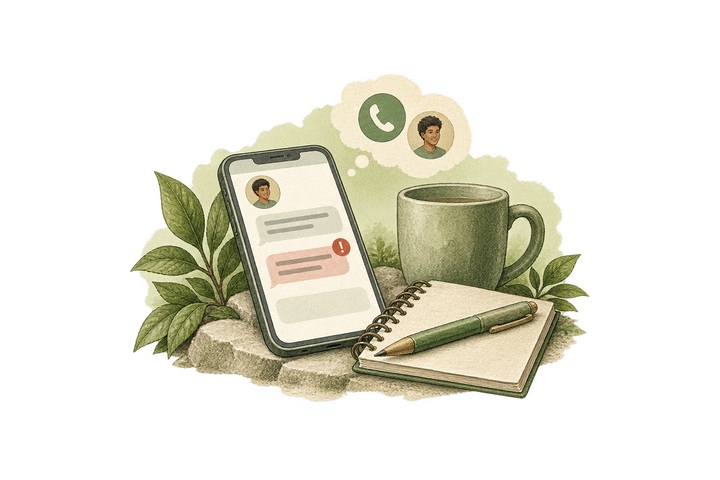
Imagine you are on your way home when a message appears under a family member’s photo: “Please answer. I need money now.”
The story sounds possible. The amount is not huge. The message may even include a personal detail, such as a broken phone, a missed train, or a request to keep it secret. You may feel guilty for hesitating, especially if you want to be caring and quick.
This is exactly when a short pause matters. A familiar name, photo, urgent tone, or personal detail can make a request feel real without proving who sent it. Checking first is not cold. It is how you protect your money and make sure help goes to the right person.
A message that feels personal
Suppose the message says, “My phone broke. I’m using someone else’s. Please send money for transport. And don’t tell Mum.”
You have just paid rent. What is left must cover food for the week. You open your payment app anyway.
Then you stop.
You type, “Where are you?” No reply.
So you call the number already saved in your phone.
Your family member answers on the second ring. “Hi, what’s wrong?”
You ask, “Did you just message me for money?”
“No. I’m at home.”
For a moment, you may feel foolish for almost sending it. Then comes relief. You block the account and check that you did not share any code or approve any payment. If you had acted on the pressure, the scammer could have asked for more. You also might have lost money you needed for rent, food, or travel.
Your pause did not make you less caring. It helped you check whether help was truly needed.
What we can learn
Urgency and secrecy are often part of the pressure. “Do it now.” “Don’t tell anyone.” These words are meant to stop you from checking. Treat that pressure as a warning sign, not as proof you should move faster.
A useful rule is simple: verify before you pay. Use a contact route you already trust, such as a saved number, an in-person conversation, or an official app or website you normally use. Do not rely on the number or link inside the unexpected message.
Make two checks. First, is this really the person or organisation? Second, does the payment itself make sense? Even a real person can be passing on bad information or asking in confusion.
Never share your password, payment PIN, or one-time security code. If you already sent money and now suspect a scam, contact your bank or payment service promptly through its official support channel. Save the messages and transaction details. Recovery is not guaranteed, and someone asking for another fee to get your money back may be trying to deceive you again.
Try this today
Save the official support contact for your bank or payment service, then add one note on your phone: “For unexpected money requests, I verify through another trusted route before I pay.”