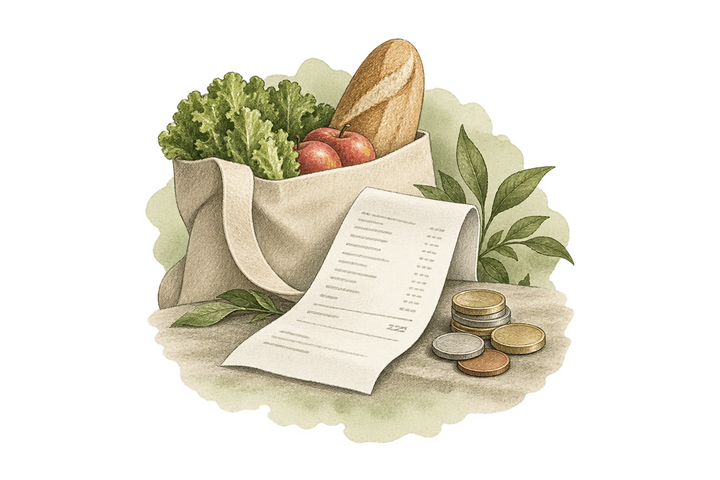
Imagine you are at a shop counter with a receipt in one hand and a bag in the other. You step away, look at the notes and coins, and something feels wrong. It seems you were given too much change.
You could keep walking. The cashier looks tired, and there are people waiting behind you. Turning back may feel awkward. Still, you return and say, "Excuse me, I think I may have too much change. Can we check?"
The cashier glances at the line. "You think so?"
You place the receipt on the counter. "I bought only these. I just want to make sure."
She counts once, pauses, and asks you to wait a moment. You step aside so the next customer can pay. Then the two of you match the items, the amount paid, and the change returned. The total is off. You did receive more than you were owed.
You hand back the extra money. She says quietly, "Thank you for coming back."
At the counter
The moment stays small, and that is part of its value. No one needs to praise you. The drawer is corrected, the line moves, and the day continues.
You are not trying to look impressive. You simply noticed that the error helped you in a way that was not really yours. You do not accuse the cashier of carelessness. You do not make a scene. You only bring back what looks wrong and let the shop verify it.
There can be practical reasons too. If you keep the money without checking, the shortage may later cause stress for staff or lead to an awkward review of the register. You do not need to assume who will be blamed or how the shop handles mistakes. It is enough to see that keeping extra money can quietly push a problem onto someone else.
The same care matters in digital situations. Suppose an unexpected payment or refund appears in your account. It is wiser to verify it through the official provider, bank, or service. Do not send money to account details a stranger gives you in a message, even if they sound urgent.
What we can learn
When an error benefits you, the hardest part is often the first few seconds. Your mind may offer quick excuses: maybe it is close enough, maybe the shop will not notice, maybe it does not matter. A calm check slows that rush.
Honesty here is not only about money. It is about staying accurate when accuracy costs you something small, such as a short delay, mild embarrassment, or giving back money you did not expect to have. Small moments like this shape ordinary character.
The practical approach is simple. Return calmly, show the receipt, and ask to check together. That gives the other person room to correct the problem without shame. It also protects you from acting on a guess.
There are limits. If the situation is unclear or digital, do not rush to send funds through unofficial contact details just to seem helpful. Use official channels and verify what happened first. The goal is not speed for appearances. The goal is a fair correction made carefully.
Try this today
If you receive change or a refund today, pause for a few seconds and check the amount before you walk away.