Imagine you are part of a school project group. On Monday afternoon, you open the class chat and see a message about a meeting that already happened. You scroll back. There is no earlier notice for you. Later, when the teacher asks why you missed the meeting, another student says, “We told everyone.”
Your face gets hot. You depend on this class, so the problem is not small. You may want to send an angry message straight away. You may also worry that if you speak up, the group could make things harder.
You do not need to stay silent to seem reasonable. But a safe response is not always a direct confrontation. Often, the best first step is to get clear about what happened and involve someone appropriate.
Left out of the group
Suppose you look more carefully and notice that two students have been using a separate chat without you. Now the missed meeting makes more sense. You feel excluded, and you are also at risk of being blamed for work you did not have a fair chance to do.
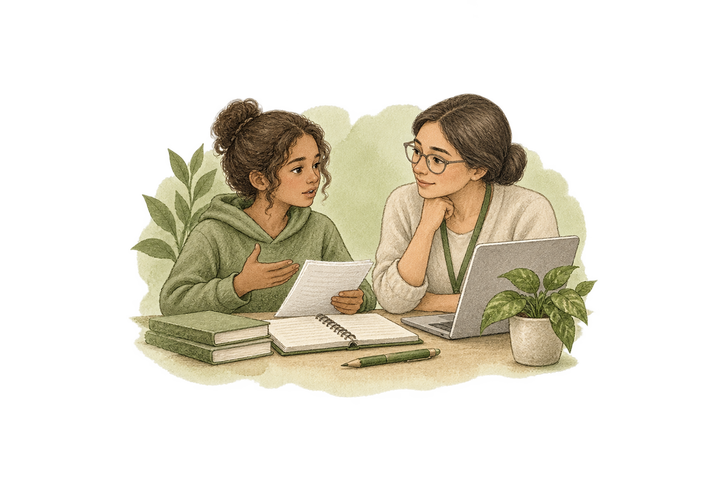
That evening, you nearly type a message to the whole class: “Stop leaving me out.” Instead, you pause. You save the messages you can see. You write down the dates of the missed meetings and what was said in class. Then you ask a teacher you trust for a private conversation.
You say, “I want to do my share. I missed two meetings because the new times were not sent to me. Can we agree on one place for all group updates?”
The teacher tells the group to use one shared channel for times and tasks. You may still feel upset, but the next steps are clearer, and the problem is harder to hide if it happens again.
What we can learn
Start with what you can describe, not what you assume. Note what happened, when it happened, who was present, and how it affected your work, access, or sense of safety. You may not know someone’s motive, but you can still explain their behaviour clearly.
Think about risk before speaking to the person directly. If they have power over you, have threatened you, or may retaliate, do not handle it alone. A trusted adult, supervisor, worker representative, or suitable local support route can help you judge the next step.
Keep a simple private record when it is safe. Messages, dates, decisions, and witnesses can help show a pattern. Store them carefully. Do not secretly record people without checking the rules where you live, and do not put yourself in danger to gather proof.
Ask for one practical change, such as a shared schedule, a different reporting contact, or someone to attend a meeting with you. If there is immediate danger, move toward safety and seek urgent local help first.
A serious incident does not need to happen repeatedly before you seek help.
Try this today
Write two factual sentences about one unfair situation: what happened and what practical help you need, and keep them somewhere private.