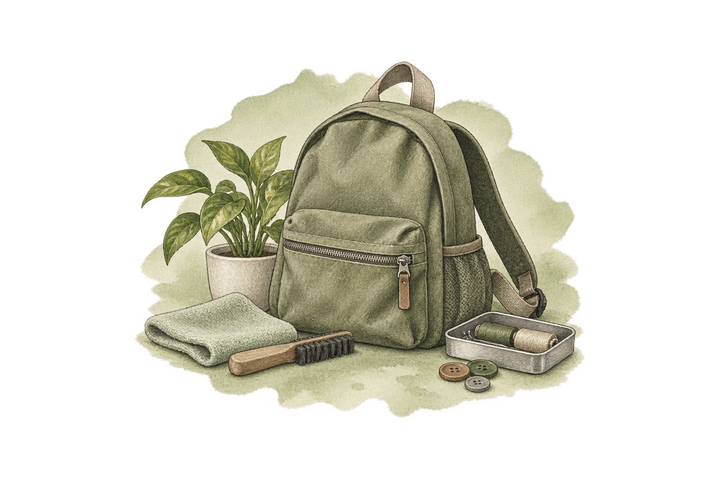
Imagine you are by the door, already late, and the zip on your backpack sticks halfway again. Your first thought may be simple: I should just buy another bag this weekend. You pull once, then stop.
A friend looks up and asks, “Is it broken?”
“Maybe,” you say. “Or maybe I’m making it worse.”
Instead of forcing it, you take the bag off and set it down. A small piece of fabric has curled into the zip. Inside the bag, the lining near one corner also looks thin from use. You check the care label and brush away dust with your fingers rather than pulling harder.
Later that day, if a repair shop is available to you, you take the bag there so someone can look at it safely.
At the repair shop
The repairer moves the zip gently and nods. “This snag is a small fix,” they say. “But this worn part here may not last forever.”
“So I don’t need a new one today?” you ask.
“Not today,” they reply. “But it is good to know what can be repaired and what may need replacing later.”
You pay a small amount for the fabric snag to be fixed safely. The zip moves more smoothly after that. The answer is not perfect, but it is honest. You do not spend money on a new backpack right away. You also do not pretend the old one will last forever just because one problem was repaired.
Over the next month, the backpack is still useful. You carry fewer heavy items in it and stop overfilling the front pocket. If you can, you set aside a little money when possible, because you now know replacement may become the better choice later.
If the repair had been too costly, unsafe, or not possible, replacing the bag would still have been reasonable. Taking care of what you own is not the same as keeping every item at any cost.
What we can learn
Small damage can grow when you respond in a rush. A stuck zip, a loose button, or a bent strap may look minor, but force can turn a repair into a full replacement. A short pause can protect both the item and your budget.
Care is not only about saving money. It is also about using things with attention. Cleaning, storing, and using an item within its limits can reduce waste and help it last longer. That matters, especially when replacing things is hard or expensive.
Repair is not a moral test. Some repairs are unsafe to do yourself. Some need tools, skill, time, or local services. Some cost more than the item is worth to you. In those cases, replacement can be the practical and responsible choice.
The useful habit is not “repair everything.” It is asking, before you force, throw away, or buy again: what is actually wrong, what is safe, and what is enough for now? Also, never handle or repair another person’s belongings without permission, even if you mean to help.
Try this today
Pick one item you use often, look for one small sign of wear, and decide whether it needs simple care, a safe repair, or a plan to replace it later.