Imagine the power has been out for less than an hour. The building is dim but calm. It seems to be only a local outage, not a disaster. You check your phone and see 8 percent. Someone at home says, "Mine is dead."
Then a simple problem appears. If you need to step out for work, medicine, or to check on a neighbour, how will people in your home find each other again if normal contact stops?
You ask, "If we get separated, where do we go?"
No one has an answer.
Later, when the lights return, the feeling stays with you. Nothing terrible happened. The outage only showed a gap. Your household was relying on one charged phone, loose memory, and hope.
After the lights came back
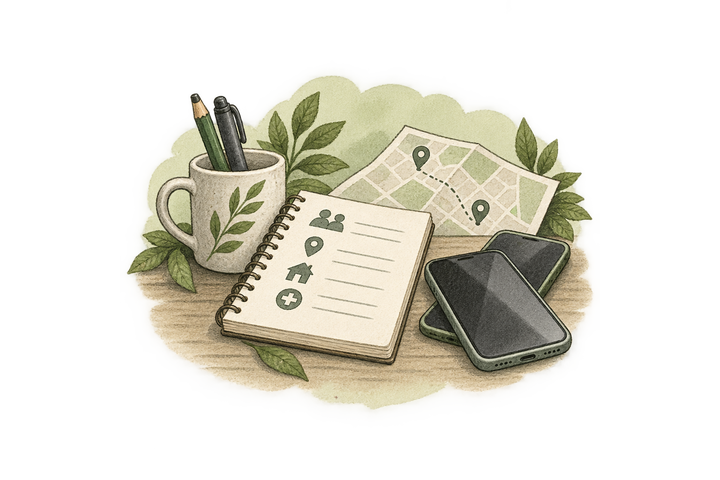
Suppose the next evening you put paper, pens, and two phones on the table and say, "Let’s work this out while things are calm."
You check local official guidance for your area. Not to copy every detail, but to see what kinds of planning are recommended where you live. Then you make a short contact list with names, numbers, the building address, and one relative in another area who could help pass messages if local contact becomes hard.
You keep the list simple and readable. One person at home asks for large print. Another says vague plans cause panic. So you write clearly and keep the steps short. You choose one meeting place just outside the building and one backup place nearby that everyone can reach without needing money or a car.
You also write down who usually carries keys, who knows the neighbours, and who may need extra help moving quickly or understanding instructions. If someone needs hearing support, simple wording, translation, extra time, or medicine information kept with them, you include that too.
Then you do a five-minute practice.
You say, "What if the first meeting place is unsafe?"
Someone answers, "We do not go there. We follow official instructions and use the backup only if it is safe to reach."
It is not dramatic. That is the point. The plan fits your real life, your budget, and your limits.
What we can learn
A household plan is not a prediction that something terrible will happen. It is a way to reduce small avoidable confusion. In stressful moments, memory gets worse, batteries run low, and people make different guesses. A shared plan turns guessing into a few agreed steps.
The useful part is not making a perfect document. It is agreeing on practical details: who to contact, where to reconnect, what local official guidance says, and what each person may need. A plan that ignores real needs is not really a plan.
It also helps to keep the plan realistic. Many households cannot buy special equipment right away. Some people live with roommates, children, elders, or relatives who disagree. Start small. A printed contact list and one meeting place can already help.
Keep contact details and any sensitive information private but accessible to household members who need them. A plan also has limits. During an actual emergency, local emergency services and official instructions come first. A household plan should support those instructions, not replace them. Never travel to a meeting place or return to a building when doing so would be unsafe. If someone needs urgent help, the priority is getting help, not finishing a checklist.
Try this today
Using local official guidance, draft one private paper note with your home address, two important contacts and possible safe meeting places. Check it with the people who would use it, including access and support needs. If you live alone, agree a check-in arrangement with a willing trusted person. Keep the note accessible to those who need it.