Imagine you have just come home from work after a move. The kitchen is still a mess. You cannot find the pan, and papers, tape, and books are covering every surface. Then a friend says, “I’m cooking anyway. I can bring an extra portion at seven.”
Dinner arriving at your door would solve a real problem. Still, your first instinct may be to explain why you should manage alone.
That hesitation can appear even when help is exactly what you need.
Dinner without a debt to settle tonight
You take a breath and ask, “Would it still fit your evening?”
Your friend says, “It would. I can leave it at the door if you want quiet.”
You answer, “That would help. Thank you. And please don’t stay to unpack.”
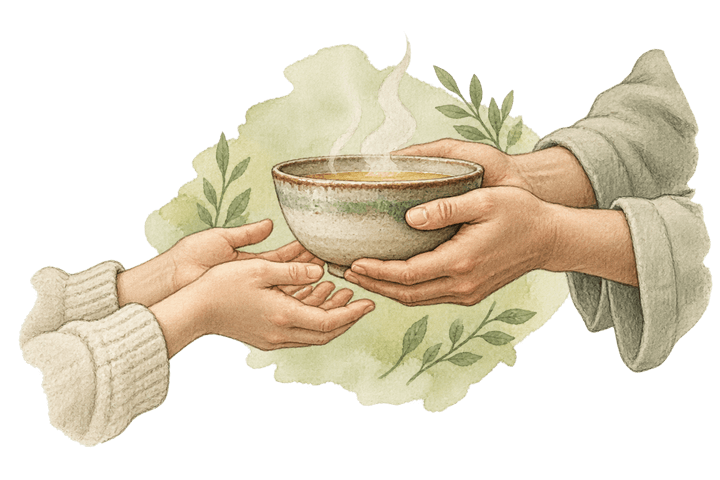
You agree on a time. The meal arrives in a container you can return later. Your friend comes in for ten minutes, asks where to put the food, listens to one complaint about missing kitchen things, then stands up to go.
“Get some rest,” your friend says.
After the door closes, you eat standing at the counter because you still have not found the chairs. The food does not fix the move, but it lowers the pressure of the evening. You unpack one more box and stop before you are exhausted.
Later, another feeling may arrive: now I owe something back immediately. You may almost send a message offering a large favour for the next day. Then you notice what you are doing. You are trying to erase the discomfort of receiving.
Instead, you send: “Thank you. That made tonight much easier.”
If the offer had brought pressure, guilt, or unwanted access to your home, you could have said no. This one was clear, limited, and respectful, so you let it count as care.
What we can learn
Receiving help is easier when the offer is specific and freely chosen. A clear meal at a clear time is different from vague involvement that takes over your space or decisions.
You do not have to accept every part of an offer. Asking one practical question and naming one boundary can protect both people. You might want dinner, but not company.
A favour is not safe if it is used to demand control, information, or access. In that case, declining is reasonable. Gratitude does not require you to ignore discomfort.
You also do not need to turn help into an immediate transaction. A sincere thank-you is often enough for today. Receiving care does not make you weak. It means you noticed what is useful and allowed it in.
Try this today
The next time a trustworthy person offers help, pause before refusing, ask one practical question, name one limit you need, and if the offer still feels respectful, let your thank-you be enough for that day.